The Compounding Effect Of The May 2026 Core Update Hitting Harder Than Previous Rollouts
Google's May 2026 core update began on May 21 at 08:40 PDT and may take up to two weeks to complete. It is the second core update of 2026, arriving six weeks after March. But here's what most coverage misses: this update lands during the largest AI search overhaul Google has ever shipped. Two forces are compounding simultaneously—and brands tracking only traditional rankings are making decisions on half the data.
What Makes This May 2026 Core Update Different
The May 2026 core update is a recalibration, not a penalty. Pages that drop were reassessed relative to everything else in Google's index. Pages that gain matched what Google now considers higher-quality relevance signals more closely than before. That logic holds. But the ranking system being recalibrated is no longer just about position on a SERP. It is now about whether your content gets selected as a source for AI-generated answers. These are two different selection mechanisms operating on the same index.
Three structural changes Google announced at Google I/O 2026 reshape the landscape:
The search box layout has been redesigned for the first time in 25 years.
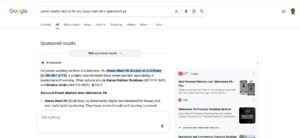 The new interface treats every query as an opportunity for AI to synthesise an answer, not just return a list of links. VentureBeat reported this signals Google's commitment to making AI-mediated answers the primary search experience.
- AI Overviews now highlight preferred sources. Google announced that users' preferred sources will be highlighted in AI search results, meaning brand trust and recognition affect which sources AI answers surface.
- AI Mode is now the default experience for many queries. Queries that previously returned ten blue links now return synthesized answers with cited sources.
An empirical study published on arXiv titled “How Generative AI Disrupts Search” found that AI Overviews, Gemini, and traditional Google Search produce meaningfully different result sets for the same queries. Extractable claims, source authority, and answer completeness carry more weight than backlink profiles and keyword density. The core update is Google recalibrating which pages deserve to rank. The AI overhaul is Google deciding which pages deserve to be cited by machines. Both are happening at the same time.
The Traffic Quality Shift Nobody Is Measuring
Traditional SEO metrics focus on ranking position and click-through rate. A new data set is emerging: AI-referred visitor quality.
AI-referred visitors convert at 4.4 times the rate of traditional organic visitors, according to Semrush data from June 2025. This premium exists because users who click after seeing an AI-generated answer have self-selected as high-intent. Google functions as a pre-qualification layer. The AI summary filters out casual browsers; the remaining clickers have already decided they want more detail.
This creates a counterintuitive dynamic: a page that loses three SERP positions during the core update might simultaneously gain citation status in Google's AI Overview for the same query. The traditional playbook would tell you the page is lost. The full picture would tell you that the page gained a more valuable position.
Brands with AI visibility across multiple engines—Perplexity, ChatGPT, Claude, and Google AI Overviews—are less dependent on Google organic rankings alone. When a core update reshuffles SERP positions, AI citation traffic provides a floor that traditional SEO-only brands do not have.
Why B2B Brands Are Seeing Bigger Volatility
 Three forces compound during this update:
User behaviour is shifting. TechCrunch reported that DuckDuckGo installs increased 30% as users reject being “force-fed” AI answers. Privacy-focused search alternatives are gaining traction. This means brands cannot rely on Google visibility alone—distributed presence across multiple discovery surfaces reduces dependencies on any single platform's algorithm.
Content quality expectations have structurally changed. Modern ranking systems evaluate context, authority, expertise, search satisfaction, and topical relevance more heavily than previous iterations. Websites built primarily around low-quality AI content, aggressive SEO manipulation, or weak topical authority are seeing significant ranking volatility. The websites most likely to benefit are those with strong topical authority, genuine expertise, and high-quality user experience.
AI Overviews are now more selective about sources. With inline links next to bullet points, hover previews, and article suggestions at the end of AI answers, Google's May 2026 core update AI is pointing more deliberately. The selection criteria for being included in AI Overviews differ from traditional ranking criteria. Entity clarity, quotable statistics, and expert attribution matter more in AI citation decisions than traditional SEO signals.
The New Measurement Framework
If you are only tracking traditional ranking position, you are missing the full picture. The measurement framework that survives this May 2026 core update includes:
Dual tracking: Monitor both SERP positions and AI citation presence across Google AI Overviews, ChatGPT, Claude, and Perplexity. A page ranking #7 might be cited in AI answers for the same query—making it more valuable than a page ranking #2 with zero AI visibility.
- Traffic quality ratio: Segment AI-referred traffic separately from traditional organic traffic. Measure conversion rates by source. If AI-referred visitors convert at 4x, that traffic is worth significantly more than raw volume suggests.
- Brand mention velocity: Track how often your brand appears in AI-generated answers, not just in traditional search results. Brand mentions in AI answers correlate more strongly with purchase intent than traditional ranking position.
- Entity clarity audit: Assess whether your content defines entities clearly, provides quotable statistics, and attributes expertise properly. These signals increasingly determine AI citation likelihood.
What to Do Now to Mitigate the May 2026 core update
The compounding effect of this core update with the AI search overhaul creates both risk and opportunity. The brands positioned to gain are those that built authority across multiple discovery surfaces rather than optimizing for a single ranking algorithm.
First, audit your content for entity clarity. AI systems parse entities better than keywords. Pages that clearly define what they are about, who the experts are, and what statistics they own will be selected for AI citation more frequently than pages optimized around keyword density.
Second, track AI visibility separately from traditional rankings. Set up monitoring for your brand name and key terms across AI engines, not just Google. The brands that gain during this update will be the ones that measured the right things during the volatility.
Third, reduce dependency on any single discovery surface. If your traffic is entirely dependent on Google organic rankings, this update exposed that risk. Distributed presence across earned media, industry publications, and multiple search platforms builds resilience against future reshuffles.
The May 2026 core update will hopefully complete its rollout soon. The AI search overhaul will continue.
The brands that understand both forces—and measure both—will make better decisions than those tracking only half the picture.
Join Our Mailing List To Learn More About SEO Tactics
 |
|
|
|---|
Geoff's research Sources for this article:
– [Google Search Status Dashboard](https://bit.ly/4uga0pR)
– [AuthorityTech: May 2026 Google Core Update](https://bit.ly/4x7HNEp)
– [VentureBeat: Google Search Box Redesign](https://bit.ly/4x9w9sI)
– [The Verge: Google AI Search Changes](https://bit.ly/43O0vn8)
– [TechCrunch: DuckDuckGo Growth](https://tcrn.ch/4upXlRr)
– [arXiv: How Generative AI Disrupts Search](https://bit.ly/3RNUIve)
– [Semrush: AI Traffic Quality Data](https://bit.ly/4f0bQr3)
from The Marketing Tutor https://bit.ly/4a3IGnR
via IFTTT

No comments:
Post a Comment